

TL;DR

Get business pricing on tech for your team
- Business-only prices and quantity discounts
- Tax-exempt purchasing
- Multiple users, one account, clear invoices
Industry experts predict nine AI technologies will lead the field by 2026, shaping sectors from healthcare to autonomous vehicles. This report details confirmed trends and ongoing developments.
Industry analysts and AI experts have identified nine specific AI technologies that are projected to lead the field by 2026.This analysis. These developments, based on current research, investments, and technological advancements, are set to transform multiple sectors, including healthcare, transportation, and finance.
According to a recent industry report, the nine AI technologies expected to dominate by 2026 include advanced natural language processing, autonomous machine learning, explainable AI, AI-driven robotics, federated learning, AI for cybersecurity, generative models, edge AI, and quantum AI. These technologies are highlighted due to their rapid development, increasing adoption, and potential to solve complex problems.
Experts from leading AI research institutions and tech companies have emphasized that these areas are receiving significant funding and focus. For example, natural language processing is advancing through models like GPT-4 and beyond, enabling more nuanced human-computer interactions. Autonomous machine learning is gaining traction for automating model training and deployment, reducing the need for human intervention. Explainable AI is becoming critical for transparency and trust, especially in healthcare and finance.
While these trends are supported by current investments and research, some specifics about their exact market share and application scope in 2026 remain uncertain, as technological breakthroughs and regulatory developments could influence outcomes. For more insights, see the original analysis.
The 9 picks
- 1
 MSI B850 GAMING PLUS WIFI Motherboard with 32GB DDR5 RAM BundleView on Amazon →
 - 2
 ASUS ROG Strix X870E-A Gaming WiFi 7 Motherboard for AMD AM5View on Amazon →
 - 3
 ASUS ROG Strix X870E-E Gaming WiFi AMD AM5 X870 ATX MotherboardView on Amazon →
 - 4
 MSI MPG X870E Carbon WiFi Gaming Motherboard (AMD Ryzen 9000/8000/7000 Series…View on Amazon →
 - 5
 ASUS ROG Strix X870-A Gaming WiFi AMD AM5 MotherboardView on Amazon →
 - 6
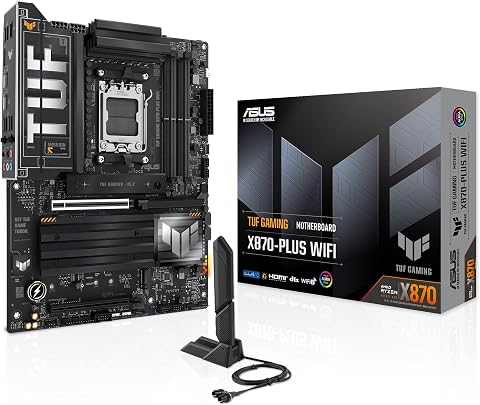 ASUS TUF Gaming X870-PLUS WiFi AMD AM5 MotherboardView on Amazon →
 - 7
 ASUS TUF Gaming Z790-Plus WiFi LGA 1700 MotherboardView on Amazon →
 - 8
 GIGABYTE B850 AORUS Elite WIFI7 AMD AM5 MotherboardView on Amazon →
 - 9
 ASUS ROG Strix B550-F Gaming WiFi II AMD AM4 MotherboardView on Amazon →
Implications of 2026’s Leading AI Technologies
The identification of these nine AI technologies highlights where industry focus, investment, and innovation are converging. Their dominance by 2026 could significantly impact sectors such as healthcare, where AI-driven diagnostics improve patient outcomes; transportation, with autonomous vehicles becoming more prevalent; and cybersecurity, where AI enhances threat detection.
For consumers and businesses, these advancements promise increased efficiency, new capabilities, and potential disruptions to existing markets. However, they also raise questions about ethical considerations, job displacement, and regulatory oversight, making awareness of these trends crucial for stakeholders across the board.
Current Trends and Foundations for 2026 AI Leadership
The forecast for 2026 builds on current AI research trajectories and market investments. Over the past few years, AI has seen exponential growth, driven by breakthroughs in deep learning, increased computational power, and vast data availability. Technologies like large language models (LLMs) and reinforcement learning have already demonstrated transformative potential.
Major tech firms and startups alike are heavily investing in these nine areas, with funding reaching record levels. Governments worldwide are also supporting AI research through initiatives aimed at maintaining competitive advantage and ensuring ethical development. Nonetheless, the pace of innovation remains unpredictable, and regulatory or technical hurdles could shift the landscape.
While some technologies, such as natural language processing and autonomous robotics, are already in advanced stages, others like quantum AI are still in early research phases, making their future impact more uncertain.
Uncertainties Surrounding AI Technology Adoption and Impact
While these nine AI technologies are identified as likely leaders, several uncertainties remain. The pace of technological breakthroughs, regulatory responses, and ethical considerations could accelerate or hinder their adoption. For example, quantum AI is still largely experimental, and its commercial viability by 2026 is uncertain.
Additionally, geopolitical factors, such as international AI regulations and funding disparities, may influence how quickly these technologies become mainstream. The exact market share and real-world applications of each technology in 2026 are still speculative, and unforeseen challenges could alter the predicted landscape.
Next Steps for Stakeholders in AI Development
Researchers and companies will continue to focus on advancing these nine AI technologies through increased funding, collaboration, and experimentation. Monitoring regulatory developments and ethical frameworks will be crucial to ensure responsible innovation.
Expect further breakthroughs, pilot projects, and early deployments over the next few years, which will clarify the practical capabilities and limitations of these technologies. Industry conferences, government policies, and academic publications will serve as key indicators of progress toward 2026 dominance.
Key Questions
What are the nine AI technologies predicted to lead in 2026?
The nine technologies include advanced natural language processing, autonomous machine learning, explainable AI, AI-driven robotics, federated learning, AI for cybersecurity, generative models, edge AI, and quantum AI.
How certain are these predictions for 2026?
While based on current research, investments, and expert forecasts, the exact trajectory of these technologies remains uncertain due to potential breakthroughs, regulatory changes, and technical challenges.
Why does this matter for businesses and consumers?
These AI advancements could significantly improve efficiency, enable new services, and disrupt existing markets, but also raise ethical, security, and employment concerns that stakeholders need to address.
Are there any AI technologies that might emerge unexpectedly by 2026?
Yes, new breakthroughs or entirely unforeseen innovations could introduce additional technologies not currently predicted, emphasizing the unpredictable nature of AI development.
Source: ThorstenMeyerAI.com
Fall Picks
fall essentials
As an affiliate, we earn on qualifying purchases.