
📊 Full opportunity report: The City That Watches Itself: The Living Digital Twin, And The God’s-Eye View We’re Building on ThorstenMeyerAI.com — validation score, market gap, and execution plan.

Get tech for your team delivered free — and shop member deals
- Fast, free delivery on millions of items
- Access to Prime Big Deal Days deals on October 6–7
- Prime Video, Amazon Music and more included
TL;DR
Cities are creating real-time, dynamic digital replicas powered by sensors and AI, transforming urban management and surveillance. This development enhances planning but raises privacy issues.
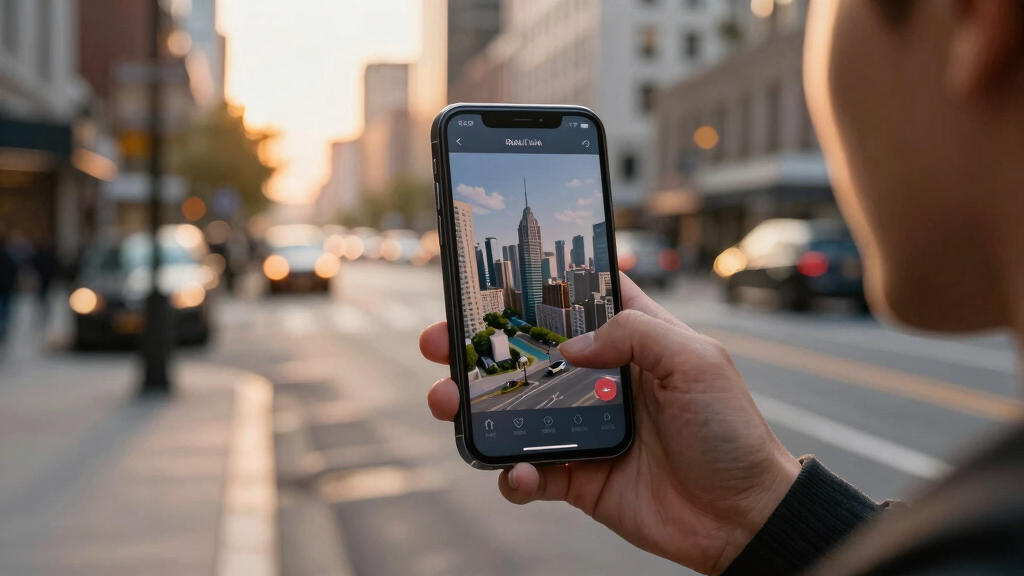
Urban centers worldwide are advancing toward living digital twins—dynamic, real-time virtual models of entire cities that can be queried, simulated, and monitored continuously. This technology, driven by breakthroughs in sensors and artificial intelligence, promises to revolutionize city planning and management but also introduces significant surveillance concerns, according to experts.
The core of this development is the integration of wide-area motion imagery (WAMI), all-weather radar, satellite data, and frontier AI models capable of understanding and interpreting heterogeneous data streams. These components combine to produce a live, rewindable digital replica of a city, capturing vehicle movements, pedestrian flows, utility usage, and environmental conditions in real time. Cities like Singapore, Helsinki, and Las Vegas are already deploying versions of these digital twins for operational purposes, such as traffic optimization and infrastructure planning.
This new generation of digital twins surpasses static maps or simple dashboards by offering a comprehensive, interactive model that can simulate future scenarios, identify potential issues before they occur, and answer complex queries in natural language. The key enabling factor is the recent leap in AI capabilities, which allows machines to interpret vast, heterogeneous data and understand scenes and behaviors, not just pixels. This shift turns city monitoring from reactive to anticipatory, fundamentally changing governance and urban planning.
The city that watches itself: the living digital twin, and the god’s-eye view we’re building
Soon most cities will exist twice — once in concrete, once as a live data model you can rewind, simulate, and question in plain language. Persistent sensing + frontier AI turn the planner’s digital twin into an oracle. The most useful thing we’ve built — and the most powerful surveillance instrument. Both at once.
- Plan better — cities & rural: traffic, zoning, energy, land use
- Emergency response — route crews, one live picture, ~50% faster
- Disaster resilience — simulate, track live, assess damage in hours
- Mass surveillance — track everyone, retroactively, forever
- Pattern-of-life — AI links movements, infers associations
- Social control — no warrant, no suspicion (cf. Baltimore, 2021 ruling)
We’re building a city that watches itself, remembers everything, and can be asked anything. The technology won’t choose between saving lives and ending privacy — we will, through the rules we write now, while the twin is still under construction and the defaults haven’t yet hardened into permanence. WAMI and the living twin open our lives to a view from the heavens that, from the dawn of civilization until a heartbeat ago, was reserved for gods and stars. The question is no longer whether we can see everything — it’s who gets to look, and who watches the watchers.
Implications of Self-Monitoring Urban Models
The development of self-watching cities has profound implications. On one hand, it enables more efficient urban planning, reduces costs, and improves responsiveness to crises, such as flooding or traffic congestion. For example, Singapore reports saving millions through precise modeling and planning. On the other hand, the same technology raises privacy and sovereignty concerns, as cities could become repositories of detailed behavioral data susceptible to misuse or external control, especially if the AI models are hosted outside national jurisdictions.
This duality makes the digital twin a powerful tool and a potential surveillance instrument. Experts warn that as these models become more sophisticated, they might be exploited for mass surveillance, with every movement and activity stored and analyzed, often without public awareness or consent. The risk of dependency on foreign AI providers also raises questions about data sovereignty and security.
As an affiliate, we earn on qualifying purchases.
Evolution from Static Maps to Dynamic City Models
The concept of digital twins originated as static, three-dimensional maps used for urban planning and infrastructure management. Cities like Singapore launched Virtual Singapore after 2012 flooding, creating detailed models of buildings, roads, and utilities. Over time, these models have become more dynamic, integrating real-time sensor data and expanding into operational tools used for traffic management and land use optimization.
The recent integration of wide-area sensors and advanced AI represents a significant leap, transforming these models from static planning aids into living, breathing representations of urban activity. This shift aligns with broader trends in smart cities, where data-driven decision-making is central. However, the technological maturity of these systems now approaches a point where they can serve as comprehensive, real-time urban surveillance networks.
“The convergence of sensors and AI is turning cities into self-aware entities, capable of monitoring and simulating their own operations in unprecedented detail.”
— Thorsten Meyer, AI researcher
As an affiliate, we earn on qualifying purchases.
Unresolved Issues and Risks of Self-Watching Cities
It remains unclear how widespread and standardized the deployment of these digital twins will become, and how governments will regulate their use. There are ongoing debates about privacy safeguards, data sovereignty, and security vulnerabilities, particularly regarding reliance on foreign AI providers and the potential for misuse by malicious actors. Additionally, the ethical implications of continuous surveillance and behavioral tracking are still being discussed, with no global consensus.
As an affiliate, we earn on qualifying purchases.
Future Developments and Regulatory Challenges
Next steps include establishing international standards and regulations for digital twin deployment, addressing privacy concerns, and developing secure, sovereign AI models. Cities are expected to expand their use of these systems for disaster response, urban resilience, and rural monitoring. Researchers and policymakers will need to collaborate to balance technological benefits with civil liberties and security considerations.
As an affiliate, we earn on qualifying purchases.
Key Questions
How do digital twins improve city planning?
They allow planners to simulate and analyze the impact of changes before implementation, reducing errors, costs, and delays.
What are the privacy risks associated with living digital twins?
These systems can track individual movements and behaviors continuously, raising concerns about mass surveillance and data misuse.
Are these digital twins secure from hacking?
Security depends on the robustness of the systems and the policies governing data access; vulnerabilities remain a concern, especially with reliance on external providers.
Will cities be able to control their own digital twins?
Control depends on whether cities develop or host their AI models internally or rely on foreign vendors, impacting sovereignty and security.
Source: ThorstenMeyerAI.com
Halloween Picks
halloween
As an affiliate, we earn on qualifying purchases.