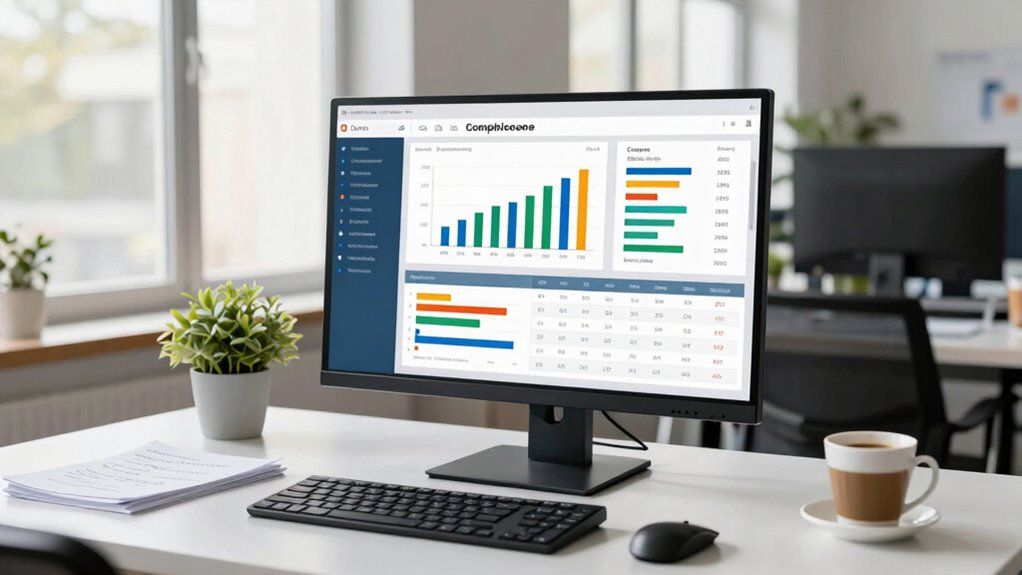

To build an effective compliance dashboard, focus on integrating real-time data from multiple sources to stay current on regulatory updates and risks. Use visualizations to highlight potential issues like overdue documentation or compliance gaps, enabling proactive management. Guarantee your dashboard offers secure, accurate data to maintain trust and meet privacy standards. By tracking mitigation efforts and regulatory shifts, you’ll stay ahead and make informed decisions. Keep exploring to discover how to maximize your dashboard’s full potential.

Get business pricing on tech for your team
- Business-only prices and quantity discounts
- Tax-exempt purchasing
- Multiple users, one account, clear invoices
Key Takeaways
- Prioritize real-time visibility into compliance status to enable proactive issue resolution.
- Automate data integration for up-to-date regulatory information and reduce manual efforts.
- Incorporate regulatory updates and amendments for timely responses to evolving requirements.
- Highlight potential risks and track mitigation actions to prevent penalties and reputational damage.
- Ensure data security and accuracy to maintain trust and comply with privacy standards.

In today’s fast-paced regulatory environment, your operations team needs a clear, real-time view of compliance metrics to stay ahead. Building a comprehensive compliance dashboard is essential for achieving this. Such a dashboard acts as your command center, integrating key data points related to regulatory updates and risk management, so you can identify issues before they escalate. With regulations changing frequently, staying on top of updates can be overwhelming. Your dashboard should automatically pull in the latest regulatory information from various sources, giving you immediate visibility into new requirements or amendments. This proactive approach minimizes the risk of non-compliance and helps you respond swiftly to regulatory shifts. Additionally, leveraging automated data integration ensures your dashboard remains current without manual effort, keeping your team focused on strategic responses rather than data gathering. Incorporating automated data updates can further streamline the process, reducing manual intervention and potential errors.
A real-time compliance dashboard helps your team stay ahead of regulatory changes and identify issues early.
Risk management is at the core of a well-designed compliance dashboard. It should highlight areas of potential risk, such as overdue documentation, compliance gaps, or inconsistent processes. By visualizing these risks clearly, you empower your team to prioritize actions effectively. Instead of sifting through endless spreadsheets or reports, you get a consolidated view that flags problems in real time. This enables you to allocate resources efficiently and address vulnerabilities before they lead to penalties or reputational damage. The dashboard should also track mitigation efforts, showing whether corrective actions are on schedule or overdue, which further strengthens your control over risk. Incorporating regulatory updates directly into the dashboard helps ensure your team stays informed of evolving compliance requirements in a timely manner. Maintaining data accuracy and security is essential to uphold trust and meet privacy standards, preventing data breaches that could compromise the integrity of your compliance efforts. Staying current with regulatory changes can be challenging, but real-time updates help your team remain agile. Ensuring all data sources are reliable and verified is key to maintaining this trust.
real-time compliance dashboard software
As an affiliate, we earn on qualifying purchases.
As an affiliate, we earn on qualifying purchases.
Frequently Asked Questions
How Often Should the Compliance Dashboard Be Updated?
You should update your compliance dashboard in real time, ensuring it reflects the latest data. Regular updates allow for effective real-time monitoring of compliance status. Incorporate data validation processes to prevent errors and maintain accuracy. This way, you can promptly identify issues, respond quickly, and stay ahead of compliance requirements. Consistent, real-time updates combined with rigorous data validation keep your dashboard reliable and your operations compliant.
What Tools Are Best for Building a Compliance Dashboard?
You should use tools like Power BI, Tableau, or Google Data Studio for building a compliance dashboard. These platforms offer strong automation integration, ensuring your data stays current with minimal manual effort. They also feature user-friendly interfaces, making it easier for you to customize and visualize compliance metrics effectively. Choosing the right tool depends on your team’s needs, but prioritizing automation and a clear interface will streamline your compliance tracking process.
How Can I Ensure Data Accuracy in the Dashboard?
Think of your data as a fragile crystal—every flaw can distort the view. To guarantee accuracy, prioritize robust data validation processes that catch inconsistencies early. Implement error tracking to monitor and resolve issues promptly, preventing small errors from snowballing. Regularly audit your data sources and update validation rules, so your dashboard remains a true reflection of reality, guiding your team confidently through compliance challenges.
Who Should Have Access to the Compliance Dashboard?
You should restrict access to the compliance dashboard based on user roles and access levels. Assign roles like administrators, managers, and team members, each with appropriate permissions. Administrators get full access to manage settings, managers can view and analyze data, while team members have limited visibility. This guarantees sensitive information stays protected, and users see only the data relevant to their responsibilities, maintaining security and operational efficiency.
How Do I Measure the Dashboard’s Effectiveness?
You measure the dashboard’s effectiveness by analyzing user engagement and applying visualization techniques. Track how often team members access it, their interaction levels, and whether they find the data actionable. Use clear graphs and color coding to highlight compliance trends, making it easy to interpret. Regularly gather feedback to refine visualization techniques, ensuring the dashboard remains a valuable tool that encourages ongoing engagement and improves compliance monitoring.
regulatory risk management tools
As an affiliate, we earn on qualifying purchases.
As an affiliate, we earn on qualifying purchases.
Conclusion
Building a compliance dashboard isn’t just a smart move; it’s essential for staying ahead in operations. With real-time insights and streamlined monitoring, you’ll spot issues before they escalate. Remember, a stitch in time saves nine—addressing compliance early keeps your team running smoothly and avoids costly setbacks. Don’t wait for problems to pile up; take control now and turn compliance into your team’s strongest asset.
automated data integration platform
As an affiliate, we earn on qualifying purchases.
As an affiliate, we earn on qualifying purchases.
regulatory update tracking tools
As an affiliate, we earn on qualifying purchases.
As an affiliate, we earn on qualifying purchases.
Halloween Picks
halloween
As an affiliate, we earn on qualifying purchases.