
By following the async rule, you encourage your team to share thoughtful updates without expecting immediate responses, which substantially reduces misunderstandings—up to 90%. You’ll promote clear, respectful communication that respects everyone’s work rhythms and time zones, minimizing rushed replies and errors. This approach boosts overall productivity and trust. To learn how to implement this effectively and enjoy smoother collaboration, continue exploring proven strategies and tools designed for async workflows.
Key Takeaways
- Encourage team members to share updates asynchronously, allowing thoughtful responses and reducing rushed replies.
- Establish clear expectations for response times and message clarity to prevent misinterpretation.
- Use structured, concise communication with bullet points and headings for easy understanding.
- Leverage tools like Slack, Notion, or Trello to centralize information and facilitate organized workflows.
- Promote a culture of patience and understanding, giving team members space to process and craft thoughtful replies.

The Async-First Remote Team Handbook: Mastering Communication and Productivity in Distributed Workforces
As an affiliate, we earn on qualifying purchases.
As an affiliate, we earn on qualifying purchases.
What Is the Async Rule and Why It Matters for Remote Teams

Have you ever experienced misunderstandings or delays simply because you were waiting for a reply? That’s where the async rule becomes essential. It’s a communication approach that encourages team members to share updates and feedback on their schedule, rather than expecting immediate responses. This method improves team dynamics by reducing pressure and fostering clarity. It also supports culture development, as it emphasizes trust and respect for individual work rhythms. When everyone understands that responses aren’t urgent, collaboration becomes more efficient. The async rule helps prevent miscommunications caused by misaligned expectations and interruptions. By adopting this approach, your team can maintain momentum, make thoughtful contributions, and build a stronger, more cohesive remote work culture. Additionally, integrating European cloud innovation ensures your data remains protected and compliant with sustainable standards, which is increasingly important in today’s digital landscape. Recognizing digital safety and data privacy as core components of effective remote communication can further enhance trust within your team. Incorporating secure data practices can also help safeguard sensitive information and promote long-term confidence. It’s a simple shift with powerful benefits.

The Async-First Playbook: Remote Collaboration Techniques for Agile Software Teams
As an affiliate, we earn on qualifying purchases.
As an affiliate, we earn on qualifying purchases.
Why the Async Rule Can Reduce Miscommunications and Boost Productivity

The async rule directly addresses common sources of miscommunication in remote teams by promoting clear, thoughtful exchanges. It helps teams navigate cultural differences by allowing members to craft messages carefully, reducing misunderstandings rooted in language or context. Additionally, it streamlines time zone management, enabling colleagues to respond at their convenience without pressure for immediate replies. This flexibility minimizes miscommunications caused by different communication styles and expectations across cultures. As a result, you’ll experience fewer errors, quicker resolutions, and more accurate information sharing. When team members can focus on quality over speed, productivity naturally improves. The async rule creates an environment where everyone’s contributions are clearer, fostering better collaboration and reducing the frustration often associated with remote work. Implementing structured communication methods can further enhance clarity and efficiency across distributed teams, especially when incorporating precise messaging techniques.
team collaboration tools Slack Trello Notion
As an affiliate, we earn on qualifying purchases.
As an affiliate, we earn on qualifying purchases.
How to Implement the Async Rule in Your Communication Workflow

Implementing the async rule into your communication workflow starts with establishing clear expectations for response times and message clarity. Set guidelines for email etiquette, such as concise subject lines, structured messages, and avoiding unnecessary replies. Encourage team members to specify when a response is needed and how quickly, which helps prevent inbox clutter and delays. For meeting scheduling, prioritize asynchronous updates over real-time calls by sharing agendas and progress updates through shared documents or project management tools. Clearly communicate preferred response windows to ensure everyone knows when to reply. Consistently applying these practices creates a predictable rhythm, reduces misunderstandings, and keeps collaboration efficient. With clear expectations, your team can embrace asynchronous communication confidently, minimizing the need for constant check-ins.

Crisis Engineering: Time-Tested Tools for Turning Chaos into Clarity
As an affiliate, we earn on qualifying purchases.
As an affiliate, we earn on qualifying purchases.
Common Challenges When Adopting the Async Rule: and How to Overcome Them

One challenge in adopting the async rule is ensuring everyone understands their roles and expectations from the start. To overcome this, you need to clarify expectations early and set clear communication norms. Doing so helps prevent misunderstandings and keeps your team aligned. Incorporating Free Floating approaches can also promote flexibility and clarity within your team dynamics. Additionally, understanding wave and wind concepts—like how different communication patterns and tools work together—can improve overall coordination and reduce confusion. Recognizing the importance of Lifevest Advisors can also aid in guiding your team through complex decision-making processes related to investments and risk management. Establishing clear role definitions and leveraging support breakfast strategies can further enhance team cohesion and understanding.
Clarify Expectations Early
Clarifying expectations early is crucial because it sets the foundation for effective communication and prevents misunderstandings down the line. When you clearly define roles, deadlines, and goals upfront, you foster better team building and reduce the risk of conflict. This proactive approach helps everyone understand their responsibilities and how their work fits into the bigger picture. Additionally, incorporating music therapy techniques into team routines can promote a more open and empathetic environment, enhancing understanding and collaboration. Establishing clear repair fundamentals early can also prevent costly mistakes and miscommunications later on. By establishing these expectations early, you create a shared understanding that streamlines collaboration and minimizes confusion in asynchronous workflows. It also encourages open dialogue, making conflict resolution smoother if issues arise later. Taking the time to clarify expectations upfront builds trust and ensures all team members are aligned, making remote collaboration more efficient and less prone to misinterpretations. Additionally, understanding communication dynamics can help teams adapt their strategies to better suit asynchronous work environments, especially as the horsepower of electric dirt bikes demonstrates how power and performance can be optimized through clear specifications.
Establish Clear Communication Norms
Establishing clear communication norms is essential when adopting the async rule, but it often presents challenges that can hinder smooth collaboration. Without agreed-upon standards, misunderstandings may increase. To address this, consider these steps:
- Define preferred communication channels to avoid confusion.
- Set expectations for response times to keep everyone aligned.
- Incorporate casual check-ins to foster team bonding and build trust.
- Encourage open feedback to continuously improve norms and adapt to team needs.
Best Practices for Crafting Clear, Thoughtful Async Messages

Crafting clear and thoughtful async messages is essential to minimize misunderstandings and keep everyone on the same page. Focus on email clarity by organizing your message logically and using simple, direct language. Break complex ideas into manageable parts, and highlight key points with bullet points or headings. Maintain tone consistency throughout your message to ensure your intent isn’t misinterpreted. Be mindful of your choice of words, avoiding ambiguity or overly casual language that could confuse recipients. Always proofread before sending, checking for clarity and tone. Remember, a well-structured message saves time and reduces back-and-forth clarifications. Clear, thoughtful communication fosters trust and efficiency, making remote collaboration smoother for everyone involved.
Tools and Platforms to Support Effective Async Communication

Choosing the right tools and platforms can considerably enhance your async communication by making messages clearer and more accessible. Effective collaborative tools and communication platforms streamline information sharing and reduce misunderstandings. Consider these options:
Selecting the right tools improves clarity and accessibility in async communication.
- Slack or Microsoft Teams for real-time and asynchronous messaging, enabling quick clarifications.
- Asana or Trello for task management, keeping everyone aligned on project progress.
- Notion or Confluence for documentation, ensuring information is centralized and easy to reference.
- Email platforms with read receipts and organized inboxes to track important messages and responses.
How the Async Rule Can Reduce Misunderstandings by Up to 90%
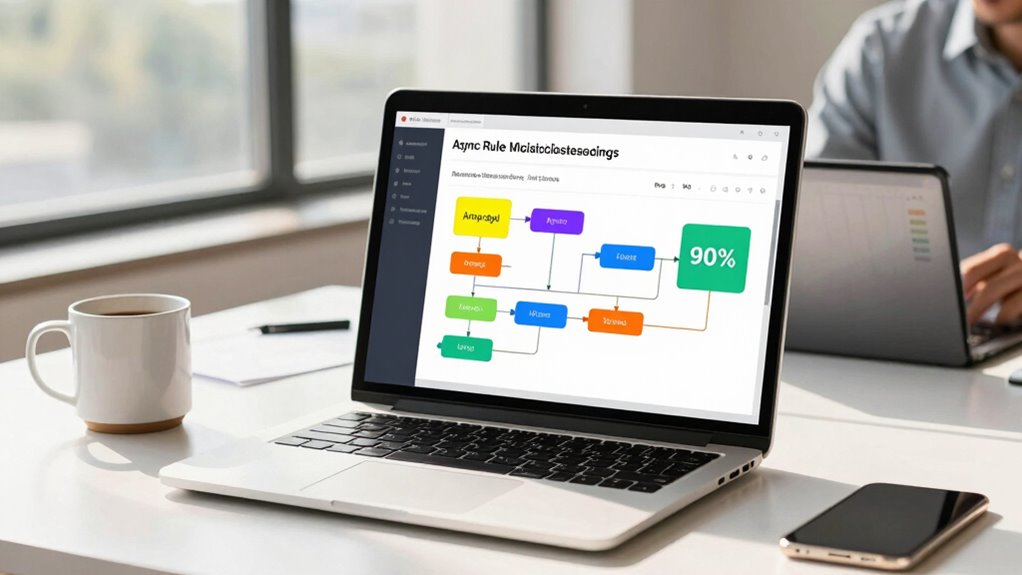
Implementing the Async Rule transforms how teams communicate by substantially reducing misunderstandings. When you allow team members to respond at their own pace, issues caused by differing time zones and varying response times diminish. This approach minimizes rushed replies and misinterpretations that often occur during real-time chats or meetings. By setting clear expectations for response times, everyone can review information thoroughly, leading to more accurate understanding. Teams experience fewer assumptions, misunderstandings, and rework because messages are crafted more carefully. Over time, this consistency markedly cuts misunderstandings—up to 90%, according to studies. The key is giving teammates space to process, clarify, and respond thoughtfully, regardless of their location or schedule. This results in clearer communication, stronger collaboration, and a more productive remote work environment. Additionally, adhering to Effective Communication Strategies ensures that the asynchronous approach remains successful and sustainable over time. Incorporating timing flexibility allows team members to maintain quality in their responses without feeling pressured, further enhancing clarity and reducing errors. Understanding the psychology of communication can aid in designing messages that are less prone to misunderstanding, ensuring that all team members interpret information as intended. Furthermore, employing technology tools designed for asynchronous communication can streamline workflows and reduce potential miscommunications.
Frequently Asked Questions
How Long Should an Async Message Ideally Be?
Your async message should ideally be concise, around 3-5 sentences or roughly 100-200 words, aligning with clarity standards. Keep your message long enough to cover essential details, but avoid unnecessary information that could cause confusion. Focus on clear, direct language, and break complex ideas into manageable parts. Remember, a well-structured message saves time and reduces misunderstandings, making communication more effective in remote work environments.
Can the Async Rule Work Across Different Time Zones?
Like a well-coordinated orchestra, your asynchronous scheduling can work across different time zones. By setting clear expectations and using shared tools, you facilitate smooth time zone coordination. You respect each other’s working hours, avoiding the chaos of overlapping schedules. This approach helps prevent misunderstandings, ensuring everyone stays aligned regardless of where they are. Embracing asynchronous communication lets you effectively bridge gaps, making remote teamwork feel almost like being in the same room.
What Training Is Needed for Team Members to Adopt the Async Rule?
You need to provide training that enhances your team’s communication skills and tech literacy. Focus on teaching clear, concise messaging, active listening, and how to use collaboration tools effectively. Encourage practice with asynchronous communication methods, like written updates and video messages. Offer workshops or tutorials to boost familiarity with relevant apps. This way, your team adopts the async rule confidently, reducing misunderstandings and improving productivity across different time zones.
How Do You Handle Urgent Issues Within the Async Rule Framework?
Ever wonder how to handle urgent issues effectively? When urgent escalation occurs, you should use priority flags to signal the importance clearly and quickly. Address the issue promptly, even if it means temporarily breaking the async flow. Communicate transparently about the urgency, and guarantee team members understand when to escalate. This approach helps maintain clarity, minimizes delays, and keeps everyone aligned without disrupting the overall asynchronous process.
Are There Specific Industries Where the Async Rule Is More Effective?
You’ll find the async rule particularly effective in tech startups and creative agencies. In tech startups, it helps teams stay aligned across time zones, reducing miscommunication during rapid development cycles. Creative agencies benefit because the asynchronous approach allows for thoughtful feedback and revisions without disrupting workflow. By adopting this rule, you create clearer communication, minimize misunderstandings, and foster a more efficient, flexible remote work environment in these industries.
Conclusion
By embracing the async rule, you can drastically diminish misunderstandings and deliver clearer communication. With consistent clarity, careful crafting, and the right tools, you’ll create a cohesive, confident remote collaboration. Don’t let miscommunications muddle your momentum—master the method, minimize missteps, and make remote work remarkably more effective. Commit to clear, considerate, and conscientious communication, and watch misunderstandings melt away, making your remote team more productive, precise, and perfectly synchronized.