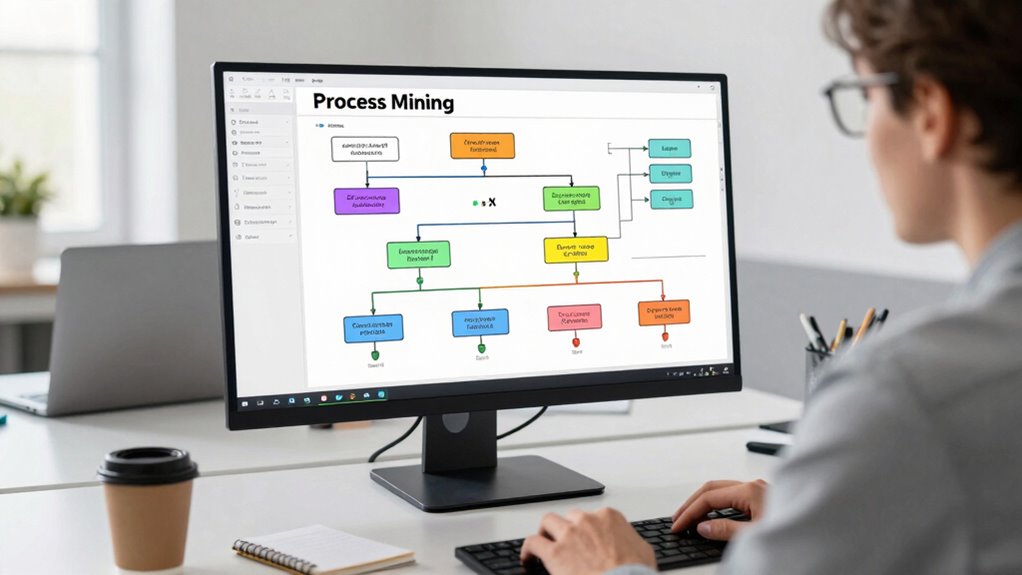

To find bottlenecks without guessing, start with clear, structured event data from your systems, focusing on key activities and timestamps. Use process mining tools to visualize workflows and identify stages with delays, long queues, or repeated tasks. Look for signs like workflow backlogs or underutilized resources to spot inefficiencies. By analyzing patterns and root causes, you can prioritize improvements effectively. Keep exploring, and you’ll discover detailed steps to optimize your processes with confidence.

Get business pricing on tech for your team
- Business-only prices and quantity discounts
- Tax-exempt purchasing
- Multiple users, one account, clear invoices
Key Takeaways
- Use process discovery tools to visualize workflows and identify stages with long wait times or repeated tasks.
- Analyze event logs for throughput times, delays, and bottleneck indicators like workflow backlogs.
- Validate and clean data to ensure accurate detection of process inefficiencies without guesswork.
- Focus on high-frequency or extended-duration activities to pinpoint critical bottlenecks.
- Continuously monitor process KPIs and visualize flow to detect and address bottlenecks proactively.
As an affiliate, we earn on qualifying purchases.
What Is Process Mining and Why It’s Essential for Your Business

Have you ever wondered how your business processes actually work behind the scenes? Process mining reveals that by analyzing digital footprints, you can uncover how tasks flow and where delays happen. It’s essential because it enables process automation, streamlining repetitive tasks and reducing errors. With process mining, you gain insights into customer segmentation, understanding different groups’ behaviors and preferences. This allows you to leverage European cloud innovation to enhance data security and scalability for your analytics. Additionally, understanding contrast ratio helps you optimize visual representations of data, making insights clearer and more impactful. This understanding is crucial for maintaining media literacy in today’s digital landscape, ensuring you interpret data responsibly. Recognizing data visualization principles can further improve how you communicate these insights effectively. Applying digital transformation strategies alongside process mining can accelerate your adoption of new technologies and improve overall business agility. This helps you tailor marketing efforts and improve customer experiences. Instead of guessing where issues lie, you get clear, data-driven answers. Implementing process mining allows you to optimize workflows, improve efficiency, and make smarter decisions. It’s a powerful tool to bridge the gap between your business’s digital activities and real-world performance, helping you stay competitive in today’s fast-paced environment.
As an affiliate, we earn on qualifying purchases.
How to Collect and Prepare Your Event Data for Process Mining
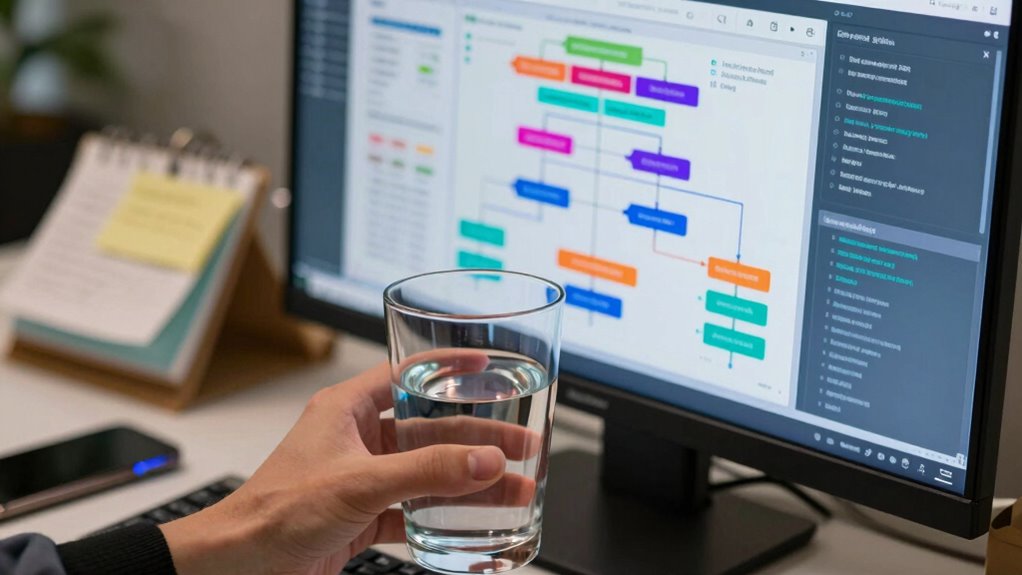
To get started with process mining, you need to gather the right event data from your systems. Next, you’ll clean and validate this data to make certain of accuracy and consistency. Additionally, structuring the data properly ensures it’s ready for effective process analysis. Incorporating data privacy considerations ensures compliance and builds trust with users throughout the process. Being aware of vetted wave and wind data sources can help improve the quality of your data collection. Understanding the comparative advantage of your data sources can also optimize your collection strategy. Recognizing the net worth and potential of your data assets can further enhance your analysis capabilities.
Extract Relevant Event Data
Gathering relevant event data is a crucial first step in process mining, as the quality and completeness of your data directly impact your analysis. To extract meaningful insights, you need an accurate event log that captures all relevant activities and timestamps. Focus on data extraction from your systems, ensuring you include key information like case IDs, activity names, and event times. This process involves identifying sources, such as databases or logs, and exporting the data in a structured format, typically CSV or XES. The goal is to gather a thorough and precise dataset that reflects real process flows. Proper extraction sets the foundation for effective analysis, enabling you to pinpoint bottlenecks and inefficiencies without guesswork. Additionally, understanding data quality and validation techniques ensures your dataset accurately represents actual processes, which is essential for reliable process mining results. Incorporating data validation methods helps confirm the accuracy and consistency of your dataset, further improving your analysis reliability. Ensuring comprehensive data collection from all relevant sources also minimizes gaps that could skew your insights. Moreover, paying attention to data completeness ensures that no critical steps are missing from your event logs, providing a full picture of your processes. Recognizing the importance of data accuracy helps in refining your dataset, leading to more precise process insights.
Clean and Validate Data Sets
Once you’ve extracted your event data, the next step is to clean and validate it to guarantee accurate process mining results. Proper data cleansing removes errors, duplicates, and inconsistencies, ensuring your analysis is reliable. Validation techniques confirm that your data accurately reflects real-world processes, catching missing or incorrect entries. Focus on these key practices:
- Removing duplicate records
- Handling missing or incomplete data
- Checking timestamp consistency
- Verifying event labels and attributes
- Ensuring data aligns with business rules
- Incorporating Free Floating concepts to understand flexible process steps and improve data interpretation
- Applying data quality standards to maintain consistency across datasets
- Evaluating process conformance to ensure data accurately represents actual workflows
- Implementing error detection methods to identify anomalies early in the data cleaning process
- Conducting data profiling to gain insights into data distributions and identify potential issues early
Applying these data cleansing and validation techniques helps you create a high-quality dataset, minimizing errors that could skew your process insights. Clear, validated data forms the foundation for uncovering true bottlenecks and improving workflows effectively.
Structure for Process Analysis
Effective process analysis starts with structuring your event data in a way that accurately captures each step of the workflow. To do this, focus on process mapping by identifying key activities, timestamps, and responsible stakeholders. Engaging stakeholders early guarantees you collect complete and accurate data. Organize your data into a clear format to facilitate process discovery. Here’s a simple example to guide you:
| Activity | Timestamp | Responsible Stakeholder |
|---|---|---|
| Order Received | 2024-04-01 09:00 | Sales Team |
| Payment Process | 2024-04-01 09:30 | Finance |
| Shipment | 2024-04-01 10:00 | Logistics |
| Delivery | 2024-04-02 14:00 | Delivery Team |
| Feedback | 2024-04-02 16:00 | Customer Service |
This structure sets a solid foundation for effective process mining. Additionally, ensuring data consistency is crucial for accurate process analysis and reliable results. Maintaining data quality involves standardizing formats and avoiding inconsistencies that could distort your insights. Regular validation and testing of your data can help prevent data errors from impacting your analysis. Incorporating data validation techniques into your process helps maintain high-quality data for better decision-making. Moreover, understanding the data collection methods ensures that your dataset remains comprehensive and representative of the actual workflow.
As an affiliate, we earn on qualifying purchases.
The Main Techniques and Tools You Need for Effective Process Mining
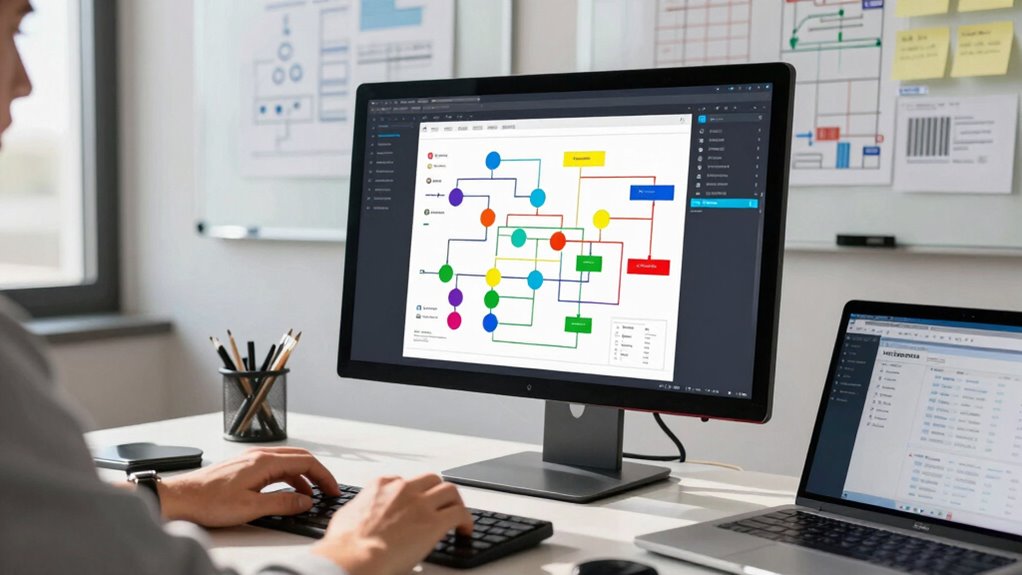
To conduct successful process mining, you need to familiarize yourself with key techniques and tools that help analyze event logs and visualize workflows. These techniques enable you to extract valuable insights from data analysis and identify bottlenecks efficiently. Some essential tools include:
Familiarize yourself with key techniques and tools to analyze event logs and visualize workflows effectively.
- Process discovery algorithms that map out workflows automatically
- Conformance checking tools to compare actual versus expected processes
- Performance analysis techniques to measure cycle times and delays
- Filtering and slicing methods to focus on specific cases or activities
- Software platforms like Celonis, Disco, or ProM that streamline data analysis and process visualization
Mastering these techniques and tools will empower you to uncover inefficiencies and optimize your business processes effectively. Remember, effective process mining hinges on leveraging the right methods and technology.
process bottleneck detection software
As an affiliate, we earn on qualifying purchases.
As an affiliate, we earn on qualifying purchases.
How to Visualize Business Processes and Find Bottlenecks
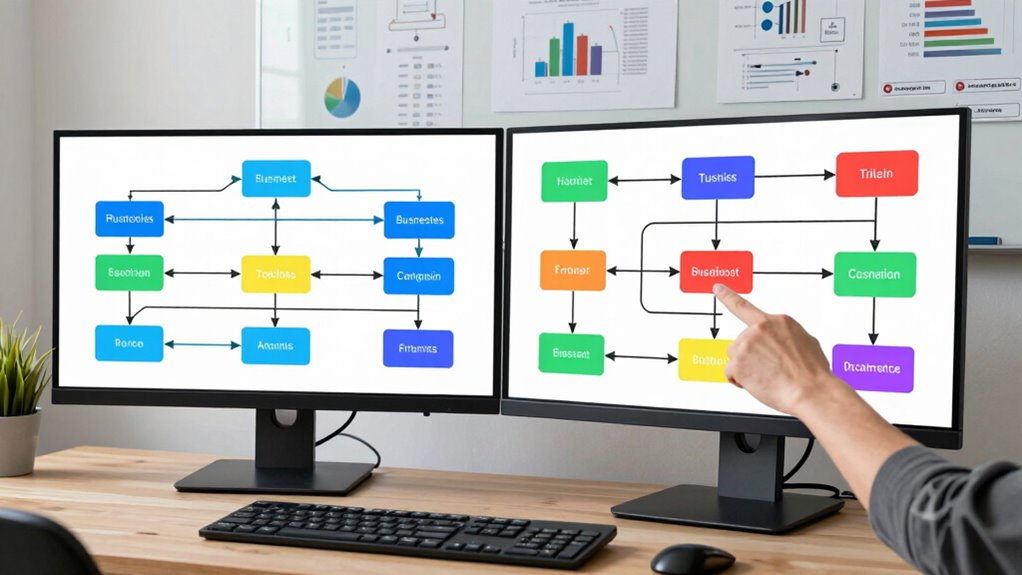
After selecting the right techniques and tools for process analysis, the next step is to create clear visualizations of your business processes. Process visualization helps you understand workflow flow and spot inefficiencies easily. To identify bottlenecks, look for stages where tasks pile up or slow down. Use visual tools like flowcharts or process maps to pinpoint these issues effectively. The table below illustrates common process stages and their impact on bottleneck detection:
| Stage | Visual Indicator | Bottleneck Potential |
|---|---|---|
| Task Execution | Long wait times | High |
| Approval Steps | Repeated approvals | Medium |
| Data Entry | Manual, error-prone | Low |
What Signs Indicate Bottlenecks or Inefficiencies in Your Processes?

Recognizing signs of bottlenecks and inefficiencies in your processes is essential for improvement. Look for indicators like delays in task completion, increased cycle times, or repeated work, which suggest workflow bottlenecks. Pay attention to low employee engagement, as frustrated or disengaged staff may signal frustration with inefficient workflows. Notice if certain steps consistently cause backlogs or if resources are underutilized, highlighting opportunities for workflow automation. Additionally, frequent errors or rework can point to process weaknesses. Monitoring these signs helps you target areas needing optimization, ensuring smoother operations and better resource allocation. By identifying these patterns early, you can implement solutions that improve overall efficiency and foster a more engaged, productive team.
How to Conduct a Process Mining Analysis Step-by-Step
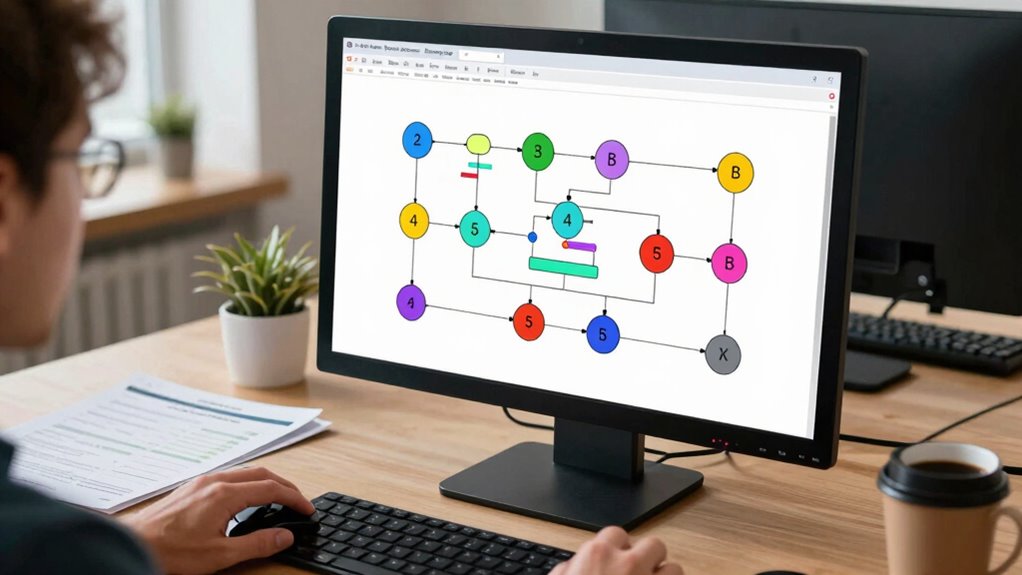
To conduct a process mining analysis, you first focus on preparing your data using techniques like cleaning and structuring to guarantee accuracy. Next, you visualize the process flows to see how tasks and activities connect, making bottlenecks easier to spot. Finally, you identify areas where delays or inefficiencies occur, helping you target improvements effectively.
Data Preparation Techniques
Preparing your data is a crucial first step in process mining, as the quality and structure of your dataset directly impact the accuracy of your analysis. Focus on data cleaning to remove duplicates, correct errors, and handle missing values. Data transformation is essential to convert raw data into a process-friendly format, such as standardizing timestamps and event labels. You should also filter irrelevant records to streamline your dataset. Guaranteeing data consistency helps prevent misinterpretations of process flows. Additionally, organize your data into a clear structure, like event logs, to facilitate analysis. Proper preparation minimizes inaccuracies and ensures reliable insights. Remember, well-prepared data forms the foundation for effective process mining and meaningful bottleneck detection.
- Data cleaning for accuracy
- Data transformation for consistency
- Filtering irrelevant records
- Standardizing timestamps and labels
- Organizing event logs
Visualizing Process Flows
Visualizing process flows is a vital step in process mining, as it transforms raw event data into clear, graphical representations of how tasks are interconnected. This is where process mapping comes into play, helping you visualize the sequence of activities and their relationships. Using flow diagrams, you can easily identify the paths that processes follow and pinpoint variations or inefficiencies. These diagrams provide an intuitive view of complex workflows, making it easier to understand the overall process structure. By creating accurate flow diagrams, you gain valuable insights into process behavior, enabling you to see where delays or bottlenecks might occur. This visual approach simplifies analysis, allowing you to communicate findings effectively and set the stage for further optimization efforts.
Identifying Bottleneck Areas
Identifying bottleneck areas is a crucial step in process mining analysis because it reveals where delays and inefficiencies occur within your workflows. By pinpointing these process bottlenecks, you can target specific points causing flow inefficiencies and improve overall performance. To do this effectively, analyze the process map and focus on stages with the longest durations or highest wait times. Look for activities with high throughput times or queues building up. Use process mining tools to visualize throughput ratios and identify points where work accumulates. Additionally, compare performance metrics across different process variants. Recognizing where flow inefficiencies happen allows you to prioritize interventions. Ultimately, this step helps you streamline processes, reduce delays, and optimize operational efficiency.
- Examine process flow durations and wait times
- Spot stages with high activity queues
- Use throughput ratios to identify delays
- Analyze variations across process versions
- Focus on stages with prolonged cycle times
How to Interpret Your Results and Find Root Causes of Delays

When analyzing process mining results, understanding what the data reveals is essential for pinpointing the root causes of delays. Look for patterns that indicate where processes slow down or become inconsistent. Delay analysis helps you identify specific steps or handoffs that consistently take longer than expected. Focus on the variations in lead times and frequency of delays at each stage. By comparing different cases, you can spot common factors contributing to bottlenecks. Don’t jump to conclusions; instead, interpret the data objectively to uncover underlying issues. Root causes often stem from resource constraints, inefficient workflows, or miscommunications. Clarifying these causes enables targeted improvements, preventing guesswork and ensuring your process becomes more streamlined and predictable.
How to Prioritize Improvements Based on Process Mining Insights

You need to focus on the most critical bottlenecks to maximize your process improvements. By analyzing the impact of potential changes, you can prioritize efforts that deliver the greatest results. Setting data-driven priorities guarantees your resources are used effectively and your improvements are aligned with your goals.
Identifying Critical Bottlenecks
To effectively prioritize improvements, it’s crucial to pinpoint the most critical bottlenecks in your process. Focus on the areas causing the longest process delays or those affected by resource constraints. Use process mining to identify stages with high frequency or extended duration, indicating significant issues. Look for points where delays ripple through the workflow, amplifying overall inefficiency. Pay attention to handoffs or decision points that slow down progression. Monitor resource utilization to spot constraints that create backlogs. By targeting these hotspots, you’ll optimize your efforts. Consider these key indicators:
- High cycle times
- Frequent rework or rejections
- Excessive waiting times
- Overburdened resources
- Recurrent process delays
Focusing on these helps make certain you address the most impactful bottlenecks first.
Analyzing Impact of Changes
After identifying the main bottlenecks, the next step is to assess how proposed improvements will impact the overall process. Consider the change impact of each potential adjustment, focusing on how it facilitates process adaptation. You need to evaluate whether the change will streamline workflows or introduce new inefficiencies. Use process mining insights to simulate or analyze the effects of these changes, helping you prioritize efforts that deliver the greatest benefit with minimal disruption. Look for improvements that enhance key performance metrics and support sustainable process adaptation. By understanding the potential outcomes, you can make informed decisions, ensuring your process evolves efficiently and effectively without unintended consequences. This strategic approach minimizes risks and maximizes the value of your process improvements.
Setting Data-Driven Priorities
Setting data-driven priorities is essential for focusing your improvement efforts where they will have the most significant impact. By leveraging process mining insights, you can identify areas that truly matter. Use heuristic methods to evaluate bottlenecks and delays, guaranteeing your efforts are targeted effectively. Incorporate qualitative insights from process participants to understand context and root causes better. Prioritize based on factors like frequency, delay duration, and impact on overall process performance. Consider potential benefits versus effort required for each improvement. This approach helps you avoid guesswork and makes your initiatives more strategic. Remember, a clear prioritization framework ensures you address the most critical issues first, maximizing efficiency and results in your process optimization journey.
Real-World Examples of Process Mining Uncovering Hidden Bottlenecks

Real-world examples clearly demonstrate how process mining can reveal hidden bottlenecks that traditional analysis might miss. In one manufacturing case, process mining uncovered delays in quality checks that weren’t obvious before, allowing the team to address specific steps. Data visualization played a vital role, transforming complex process data into clear, actionable insights. By mapping out workflows visually, you can see where delays accumulate and identify inefficiencies quickly. Another example involves a retail company that used process mining to analyze order fulfillment. They discovered a bottleneck at the invoice approval stage, previously hidden in volume data. These real-world cases show how process mining exposes hidden issues, enabling you to optimize workflows effectively without guesswork, saving time and costs while improving overall efficiency.
Tips for Continuous Monitoring and Improving Your Business Processes

To keep your business processes efficient and responsive, continuous monitoring is essential. Regularly analyzing process data helps you identify bottlenecks early and implement process automation to streamline workflows. Focus on improving customer experience by adapting processes based on real-time insights. Use process mining tools to track key performance indicators and detect deviations promptly. Establish feedback loops to refine your strategies and ensure ongoing improvements. Keep your team engaged in monitoring efforts to foster a culture of continuous improvement. Regular reviews enable you to stay agile and responsive to changing demands. By maintaining vigilant oversight, you can optimize operations, reduce delays, and enhance customer satisfaction. Consistent monitoring keeps your processes aligned with business goals and drives long-term success.
Frequently Asked Questions
How Can Small Businesses Implement Process Mining Cost-Effectively?
You can implement process mining cost-effectively by using affordable, user-friendly tools designed for small businesses. Focus on small business strategies like starting with key processes, integrating data from existing systems, and training your team to analyze the results. Look for free or low-cost options that offer essential features, and gradually expand as you gain insights. This approach helps you identify bottlenecks without overspending, improving efficiency efficiently.
What Are Common Challenges Faced During Process Data Collection?
You often face challenges like guaranteeing data accuracy and securing stakeholder engagement during process data collection. It’s true that inaccurate or incomplete data can skew your insights, making it hard to identify real bottlenecks. Engaging stakeholders early helps gather thorough, reliable data, but it can be difficult to get everyone on board. Addressing these challenges involves clear communication and validating data to assure your process mining efforts are effective.
How Does Process Mining Integrate With Existing ERP Systems?
You can integrate process mining with your existing ERP systems through data integration, ensuring seamless access to process data. It works by extracting event logs directly from your ERP, which requires checking system compatibility. This way, you get real-time insights into your processes, helping you identify bottlenecks without guesswork. Proper integration streamlines analysis and enhances your understanding of operational efficiency, making process improvement more straightforward and effective.
Can Process Mining Be Applied to Non-Standard or Custom Workflows?
Think of process mining as a versatile toolbox that adapts to your needs. Yes, it can be applied to non-standard or custom workflows, allowing you to analyze even the most unique processes. With flexible analysis features, you can visualize and identify bottlenecks in your custom workflows, giving you clear insights. This makes process mining a powerful tool, no matter how complex or tailored your workflows are.
What Skills or Team Members Are Essential for Successful Process Mining?
You need team members with strong analytical skills to interpret process data effectively. Collaboration is essential, so include stakeholders from IT, operations, and management to ensure thorough insights. Data analysts, process owners, and sometimes data engineers work together to set up and refine process mining tools. Their combined efforts help you identify inefficiencies quickly, making your process improvements more accurate and impactful without guesswork.
Conclusion
By applying process mining, you can uncover hidden bottlenecks and inefficiencies with confidence. Visualizing your data helps you see where delays occur and understand their root causes. Think of your process as a flowing river; identifying obstructions allows you to clear the way for smoother operations. Embrace continuous monitoring, and you’ll stay ahead, ensuring your business runs seamlessly and efficiently—no guesswork needed.
Halloween Picks
halloween
As an affiliate, we earn on qualifying purchases.